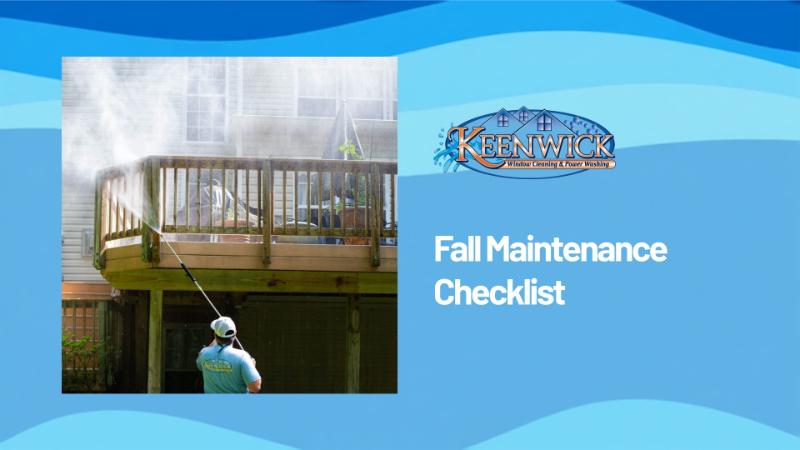
Your fall residential power washing checklist for Maryland homes. Learn which surfaces to clean before winter and what to leave to the pros.
Power Washing Fall Cleaning Checklist
The short answer: fall is the best season for residential power washing because it clears summer buildup, pollen, and organic growth before Maryland’s freeze-thaw winter locks that grime onto your surfaces. A clean exterior heading into winter resists staining, rot, and slick spots far better than a dirty one.
Fall in Maryland brings its own mix: leaves dropping from mature oaks and maples, lingering humidity off the Chesapeake, and the first cold snaps that turn trapped moisture into a problem.
This fall maintenance checklist walks through:
- Why fall timing works in Maryland
- The surfaces every homeowner should prioritize
- What to leave to a professional crew
- How to prepare your property before the fall
Why Fall Is the Right Time for Residential Power Washing
Fall gives you cool, stable weather and a shrinking window before winter sets in. Surfaces dry faster than in peak summer humidity, and there is far less fresh pollen to undo your work.
Here is what makes autumn the smart choice across Maryland:
You clear summer buildup
Months of pollen, dust, mildew, and organic growth settle into siding, decks, and concrete. Fall power washing strips it before it hardens.
You protect surfaces through winter
When grime holds moisture and temperatures drop below freezing, that trapped water can stain concrete, feed mold, and rot wood. Cleaning now removes the moisture trap.
You reduce winter slip hazards
Algae and mildew on walkways and steps get dangerously slick once fall rain and frost arrive.
You get ahead of holiday hosting
A fresh exterior reads as well maintained the moment guests pull into the driveway.
Your Fall Residential Power Washing Checklist
Work through these surfaces in order, from the house down to the ground. Each one benefits from a different method, and some need a gentler approach than the phrase “power washing” suggests.
1. House Siding
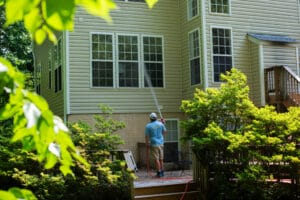
Start with the walls. Summer leaves a film of pollen, dust, and organic growth on siding that dulls the whole exterior and holds moisture against the surface.
Most siding should not be blasted with high pressure.
Vinyl, painted wood, and stucco clean best with the low-pressure, solution-based method used in soft washing, which lifts algae and mildew without forcing water behind panels.
2. Decks and Patios
Wood decks and paver patios collect embedded dirt, sap, and organic growth over the summer. Left through winter, that buildup traps moisture and speeds up rot and staining.
A proper deck cleaning clears the grime and, if you plan to seal or stain before winter, gives you the clean, dry surface that sealing requires.
3. Driveways, Walkways, and Concrete
Concrete takes the worst of it: oil spots, grease from summer grilling, tire marks, and the mildew that turns walkways slick. Clearing it now prevents those slip hazards once the surface stays wet and cold.
This is where true concrete high-pressure cleaning is needed.
4. Fences
Fences catch spray, splash, and shade, which makes them a magnet for green algae and gray weathering.
A clean fence sharpens the whole yard’s appearance heading into the bare months.
Fence power washing works across wood, vinyl, and metal, matched to the material so the surface comes clean without damage.
5. Gutters
Once the last leaves fall, gutters clog fast in neighborhoods with mature tree cover. Blocked gutters overflow, send water down against your foundation, and in a Maryland winter can lead to ice dams.
Time your gutter cleaning for late fall, after the leaves finish dropping but before the first hard freeze.
What to Leave to a Professional
A homeowner with a rented machine can handle a first-floor patio. A few jobs, though, carry real risk of damage or injury and belong with a trained crew.
Power washing areas that should be cover by professional contractors
Your roof
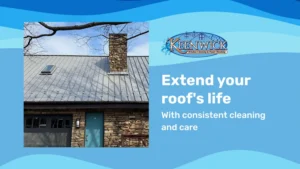
Never pressure wash shingles. The force strips granules and drives water under the shingles, which invites leaks. Roofs need the gentle, low-pressure approach of roof washing instead.
Skylights
Fall debris that collects around skylight seals traps moisture, and Maryland’s freeze-thaw cycles can stress the sealant over the winter. Professional skylight cleaning clears the glass and checks the seal while the crew is already working up top.
Second-story siding and high windows
Anything that requires a ladder at height is where most home-cleaning injuries happen.
Delicate or older surfaces
Aged wood, soft mortar, and some painted surfaces can be gouged or stripped by the wrong pressure and nozzle.
Power washing general rule:
If the surface is fragile or the job needs a ladder, the safer and often cheaper choice is to have it done right the first time.
How to Prepare a House for a Residential Power Washing
A little prep makes the appointment faster and protects what surrounds the work area.
- Clear the surfaces: Move patio furniture, planters, grills, and décor out of the way.
- Close windows and doors: Make sure everything is sealed before the crew starts.
- Move vehicles: Pull cars off the driveway so the concrete can be cleaned end to end.
- Note fragile plantings: Point out any delicate landscaping so it can be rinsed and protected.
- Secure pets: Keep animals indoors while equipment is running.
How Keenwick Manages a Fall Residential Power Washing
Keenwick has cleaned exteriors across Maryland and Delmarva since 1999, and the family-run team is now proudly second-generation owned. The crews match the right method to every surface, from low-pressure soft washing on siding to high-pressure work on concrete, so your home is cleaned thoroughly without damage.
When you are ready, Keenwick can walk your property, recommend the right services for the season, and get your fall cleaning on the calendar. Get a quote and head into winter with an exterior that is ready for the weather, the holidays, and everything in between.
H3: Want to stop scheduling it season by season?
The Shine Service Plan puts your exterior cleaning on a recurring schedule, with savings built in.
Frequently Asked Questions About Fall Residential Power Washing
What is power washing?
Power washing is a cleaning method that uses a high-pressure stream of water to remove dirt, grime, mold, mildew, and other buildup from exterior surfaces. It works well on hard, durable surfaces like concrete driveways, walkways, and pavers, where stains and organic growth need real force to lift.
When is the best time for fall power washing in Maryland?
Aim for early to mid fall, once summer growth has settled but before the first hard freeze. That timing lets surfaces dry fully and clears buildup before cold weather locks it in. Gutters are the exception; save those for late fall after the leaves finish dropping.
Is it too cold to power wash in the fall?
Usually not. Fall’s mild temperatures are close to ideal. The main limit is freezing weather, since water needs to dry rather than turn to ice, so the work is best scheduled before consistent hard freezes arrive.
Should I power wash before or after gutter cleaning?
Wash the house and upper surfaces first, then clean the gutters, so debris rinsed from the roofline and siding does not end up back in freshly cleared gutters. When a crew handles both, they sequence it for you.
What is the difference between power washing and soft washing?
Power washing uses high-pressure water and suits hard surfaces like concrete and pavers. Soft washing uses low pressure with cleaning solutions to lift algae and mildew from delicate surfaces like siding, painted wood, and roofs without damaging them.