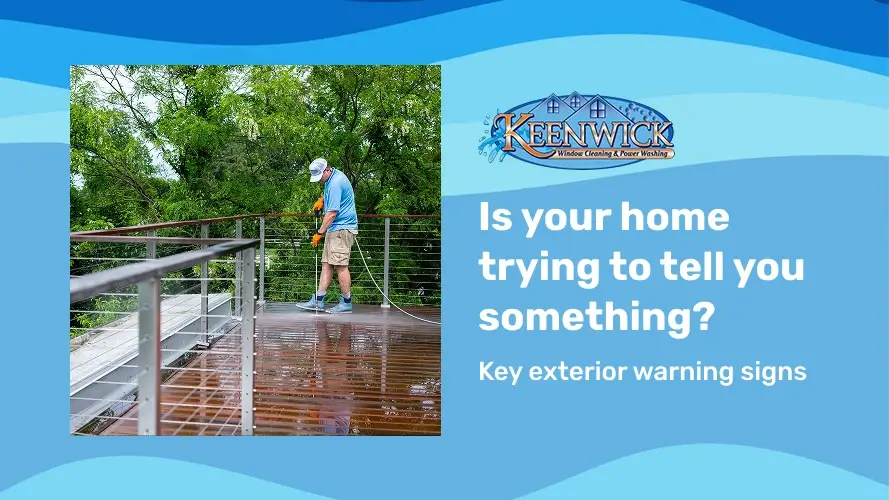
Maryland homes take a beating year-round. Between humid summers, wet springs, and winter salt, the exterior of any house picks up a steady buildup of algae, grime, mold, and oxidation. Knowing the home exterior cleaning signs before they turn into structural damage is the difference between a quick professional wash and an expensive repair bill.
This guide covers the key signs your home exterior needs cleaning, what each sign means for your property, and when it is time to call in a professional power washing company.
Quick checklist: home exterior cleaning signs to look for:
- Green or black streaks on siding or roof
- Stained or discolored driveway and walkways
- Visible mold or mildew on exterior walls
- Chalky, fading, or peeling paint
- Spider webs, insect nests, or pest activity around eaves
- Bird droppings or organic debris accumulation
- A dull, aged appearance despite the house not being old
- More than 12 months since the last exterior wash
- Preparing to sell your home or list it for rent
- A commercial building facing a tenant or client inspection
Sign 1: Green or black streaks on siding or roof
One of the most visible house washing signs of dirt is the appearance of green or black streaks running down siding or across roof shingles. The dark discoloration on roofs is typically caused by Gloeocapsa magma, a cyanobacterium that feeds on the limestone filler in asphalt shingles. On siding, green growth is almost always algae or mold taking hold in moisture-prone areas.
These streaks are not just cosmetic. Left untreated, algae and cyanobacteria break down roofing materials and siding panels over time. Maryland’s humid climate, with warm summers and consistently wet springs, creates near-perfect conditions for this kind of growth to spread quickly.
Soft washing is the correct method for roofs and painted siding. High-pressure washing can force moisture into wall cavities and strip protective coatings. Soft washing uses low pressure combined with biodegradable cleaning solutions to remove the growth at its root.
Sign 2: Stained or discolored driveway and walkways
Oil stains, tire marks, rust from metal garden tools, and moss creeping in from the edges are all common home exterior cleaning signs that get ignored because they seem cosmetic. Over time, staining becomes embedded deep in concrete and pavers and cannot be removed with a garden hose or standard cleaning products.
Moss and algae on concrete walkways also create a real slip hazard, particularly when wet. If your driveway or front path has developed a greenish tint, that is algae growth, not just dirt, and it will continue spreading until the surface is properly treated.
Concrete and masonry respond well to high-pressure power washing services. The results are usually dramatic and the surface is noticeably safer afterward.
Sign 3: Visible mold or mildew on exterior walls
What are signs of mold on exterior walls? Look for dark patches near the roofline, around window frames, in corners where siding panels meet, and in shaded areas that stay damp. Mold on your exterior walls is not just a cosmetic problem. When growth develops near doors, windows, and ventilation points, spores can work their way indoors, creating air quality and health concerns for the household.
Signs of mold on home exterior siding typically appear as dark gray, black, or greenish patches with a slightly fuzzy texture. Mildew appears flatter and more powdery. Both thrive in areas that retain moisture and receive limited sunlight.
Mold can begin growing within 24 to 48 hours of sustained moisture exposure. In Maryland, that window opens every time it rains and especially in shaded areas that never fully dry. A professional assessment identifies the extent of the growth and determines the correct treatment.
Sign 4: Chalky, fading, or peeling paint
Paint does not only peel from age. Oxidation from prolonged sun exposure causes a chalky white residue to form on painted surfaces. When dirt and grime are trapped against the surface, they accelerate that breakdown further. Running your hand along painted siding and finding a white, powdery residue is a clear indicator that oxidation is already underway.
Regular exterior home cleaning extends paint life by two to five years. A clean surface also provides better adhesion for fresh paint if repainting is planned. Exterior surface cleaning before a repaint is standard professional practice for this reason.
Sign 5: Spider webs, insect nests, and pest activity
Soffits, eaves, porch ceilings, and window corners are natural collection points for organic debris: leaves, dirt, pollen, and moisture. That buildup attracts spiders, wasps, and other insects looking for sheltered nesting spots close to entry points.
Beyond the nuisance factor, insect nests in soffits can signal entry points into attic or wall cavities. Exterior grime buildup in these areas creates hospitable conditions for pests that would otherwise have fewer footholds. Regular house washing clears away the debris and nesting material.
Sign 6: Bird droppings and organic debris accumulation
Bird droppings are more damaging than most homeowners realize. The uric acid in droppings eats through paint, protective coatings, and even raw wood within months of exposure. On patios, decks, and siding, a regular accumulation of droppings creates permanent pitting and staining if left too long.
Leaves and organic matter collecting in gutters, on ledges, and against foundation walls trap moisture directly against exterior surfaces. That trapped moisture is the starting point for mold removal exterior situations, algae removal on house siding, and eventually structural deterioration.
Sign 7: Your home looks dull or aged
Atmospheric grime accumulates invisibly. Vehicle exhaust particles, pollen, dust, and fine particulate matter settle onto every exposed exterior surface over months and years. Individually, none of it is dramatic. Collectively, it creates a film that dulls paint color, dims the sheen on trim, and makes even a well-maintained property look neglected.
Comparing current photos of your home to photos from a few years ago often reveals how much darker, grayer, or generally less vibrant the exterior has become. That gradual dimming is a textbook home exterior cleaning sign that does not involve visible stains or streaks but is just as real.
Curb appeal cleaning through a single professional wash routinely restores the original appearance of siding in a way that painting over grime cannot replicate.
Sign 8: It has been more than 12 months since the last wash
How often should a house exterior be washed? The Power Washers of North America recommends at least annual washing for residential properties. In Maryland, with high humidity, active pollen seasons, and proximity to the Chesapeake Bay bringing salt air and moisture, twice a year is the better standard.
When should you power wash your house? Spring is ideal: after pollen season ends and before summer humidity peaks. A second wash in early fall clears summer grime and algae buildup before cold weather arrives. If the last exterior wash was more than 12 months ago, the buildup is almost certainly visible to anyone looking at the property.
Sign 9: You are preparing to sell or rent the property
Curb appeal is the first thing buyers and renters see before stepping inside. Real estate research consistently shows that exterior improvements, including professional washing, can increase perceived home value by five to ten percent. Real estate agents frequently recommend a professional wash before listing because first impressions drive offers.
For rental properties, a freshly washed exterior signals to prospective tenants that the property is maintained and management takes upkeep seriously. Scheduling regular residential power washing in Maryland as part of property maintenance is a straightforward way to protect and sustain home value.
Sign 10: Your commercial building is facing an inspection
For commercial properties, the stakes around exterior appearance are higher. A stained building entrance, discolored signage, grease streaks on loading docks, or visible mold on facades signals negligence to potential tenants, clients, and inspectors before any conversation takes place.
Commercial building pressure washing before inspection is a recognized practice in commercial property management. Commercial power washing involves larger surface areas, industrial-grade equipment, and scheduling that works around business operations. Dirty brick exterior cleaning service in Maryland is particularly relevant for older commercial buildings with porous masonry that retains discoloration.
Power washing vs soft washing: which method does your property need?
Does my house need soft washing or power washing? The answer depends on the surface type and what needs to be removed.
Power washing (1,500 to 3,000 PSI): Best for concrete driveways, brick, stone pavers, and hardscaping. Effective for removing embedded stains, oil, and heavy grime. Higher surface risk if applied to the wrong material.
Soft washing (100 to 500 PSI): Best for roofs, vinyl siding, stucco, and painted wood. Uses biodegradable cleaning solutions to treat algae and mold at the root rather than blasting the surface. Very low risk of surface damage.
A professional assessment before any cleaning begins ensures the right pressure and solution are matched to each specific surface. Applying high pressure to vinyl siding or painted wood is a common DIY mistake that causes more damage than the original grime.
Why hire a professional power washing company?
How do I know if my house needs power washing beyond visible signs? A professional power washing company evaluates moisture levels, surface porosity, paint condition, and growth type before recommending a method. DIY power washing with incorrect pressure settings can crack vinyl siding, strip paint, shatter window seals, and drive water into wall cavities.
Eco-friendly power washing uses biodegradable detergents that clean effectively without damaging landscaping, harming pets, or contributing runoff to local waterways including the Chesapeake Bay watershed. Professional pressure washing services also include post-rinse inspection to confirm the growth has been fully treated and not just surface-rinsed.
Homeowners across Annapolis, Severna Park, Pasadena, Edgewater, Davidsonville, Arnold, Cape St. Claire, and surrounding areas in Maryland deal with the same climate-driven exterior conditions and benefit from scheduled professional maintenance.
Give your home the clean it deserves
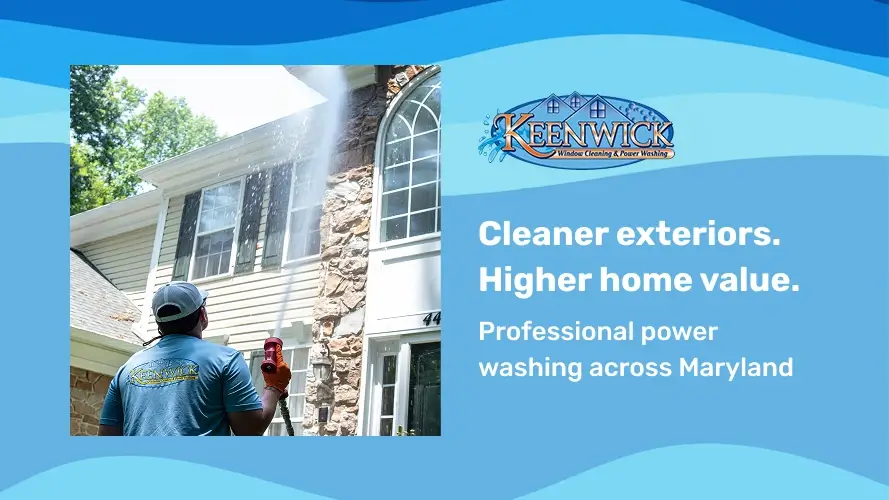
If your property is showing any of the home exterior cleaning signs on this list, or you simply cannot remember the last time the exterior was professionally washed, now is the right time to act. Maryland’s climate does not pause, and neither does the buildup it causes.
At Keenwick, we have been keeping Maryland homes and businesses clean since 1999. Second-generation owned and operated, we bring consistent care to every job: the right equipment, eco-friendly products, and a team that assesses before it sprays. From soft washing delicate roofs to restoring driveways and brick, our residential power washing in Maryland and commercial power washing services cover properties of every size.
We serve homeowners and businesses across Annapolis, Severna Park, Pasadena, Edgewater, Davidsonville, Arnold, Cape St. Claire, and surrounding areas. Whether it is a single-family home, a rental, or a commercial building, we show up, do the job right, and leave your property looking its best.
Ready to get started? Call us at or request a free quote online. Spring is the peak season so book early to secure your slot.
Frequently asked questions
1. How do I know if my house needs power washing?
Look for green or black streaks on siding, stained driveways, visible mold or mildew, chalky paint, and a general dullness compared to how the property looked a few years ago. If it has been more than 12 months since the last wash, a professional inspection is worth scheduling.
2. How often should you power wash your house?
At least once a year. In humid climates like Maryland, twice a year is the better standard: once in spring after pollen season and once in early fall before winter.
3. Is green on siding dangerous?
Green growth on siding is typically algae or mold. Algae itself does not immediately damage siding, but traps moisture against the surface, which accelerates deterioration. Mold is a more serious concern, particularly near doors and windows where spores can migrate indoors.
4. What happens if you do not power wash your house?
Without regular exterior surface cleaning, dirt, mold, and algae break down exterior surfaces over time. This leads to paint failure, wood rot, siding damage, and structural deterioration that costs significantly more to repair than a routine wash.
5. When is the best time to power wash your house in Maryland?
Spring, after pollen season, is the primary window. Early fall is a good secondary opportunity. Avoid washing immediately before an extended cold period, as residual moisture in surface joints can freeze.
6. How much does power washing cost in Maryland?
Residential power washing services in Maryland typically range from $150 to $500, depending on property size, surface types, and the extent of buildup. Commercial power washing costs vary significantly based on square footage and access requirements.
7. Does soft washing or power washing work better for roofs?
Soft washing is the correct method for roofs. High-pressure washing can dislodge granules from asphalt shingles, void manufacturer warranties, and force water under shingles. Soft washing treats algae and mold chemically at low pressure, preserving the roof surface.